7 Best High Risk Merchant Services Compared (2026)
Compare the best high risk merchant services of 2026 — industry acceptance, fees, reserves, support, and contracts — to find the right fit.
The standard advice for high-risk merchants is to find a specialist underwriter who will place you with a real acquiring bank, then keep your dispute ratio under the network thresholds. That advice is directionally right and practically incomplete. Approval solves your first week. It doesn't solve what happens when volume doubles in a quarter, when the bank adds a reserve, or when the settlement rail decides whether cash lands in minutes or in five days.
Rejection by a conventional processor is only the first problem. The key decision is which provider combination gives you industry acceptance, predictable costs, manageable reserves, usable support, and contract terms you can live with. This comparison runs seven options against those six criteria, examines how each one underwrites and settles, and shows why the settlement model (bank payout versus direct crypto settlement) may matter more than the headline rate. Read every entry against your own industry, volume, and jurisdiction, and verify the final terms in the written agreement before you sign.
1. NexaPay
High-risk merchants usually shop for approval first. Settlement deserves the harder look. A processor can say yes, then leave you exposed when a dispute lands after the payout has already been spent.
Mastercard's 2024 e-commerce fraud analysis cites Juniper Research's estimate that global e-commerce fraud losses would exceed $48 billion in 2023, up from roughly $41 billion in 2022, and puts potential merchant chargeback exposure at more than $100 billion for the same year. Friendly fraud, where a real cardholder disputes a charge they made, accounted for about 61% of those chargebacks. A lower rate does not change that liability by itself.
How card-to-crypto settlement changes the risk equation
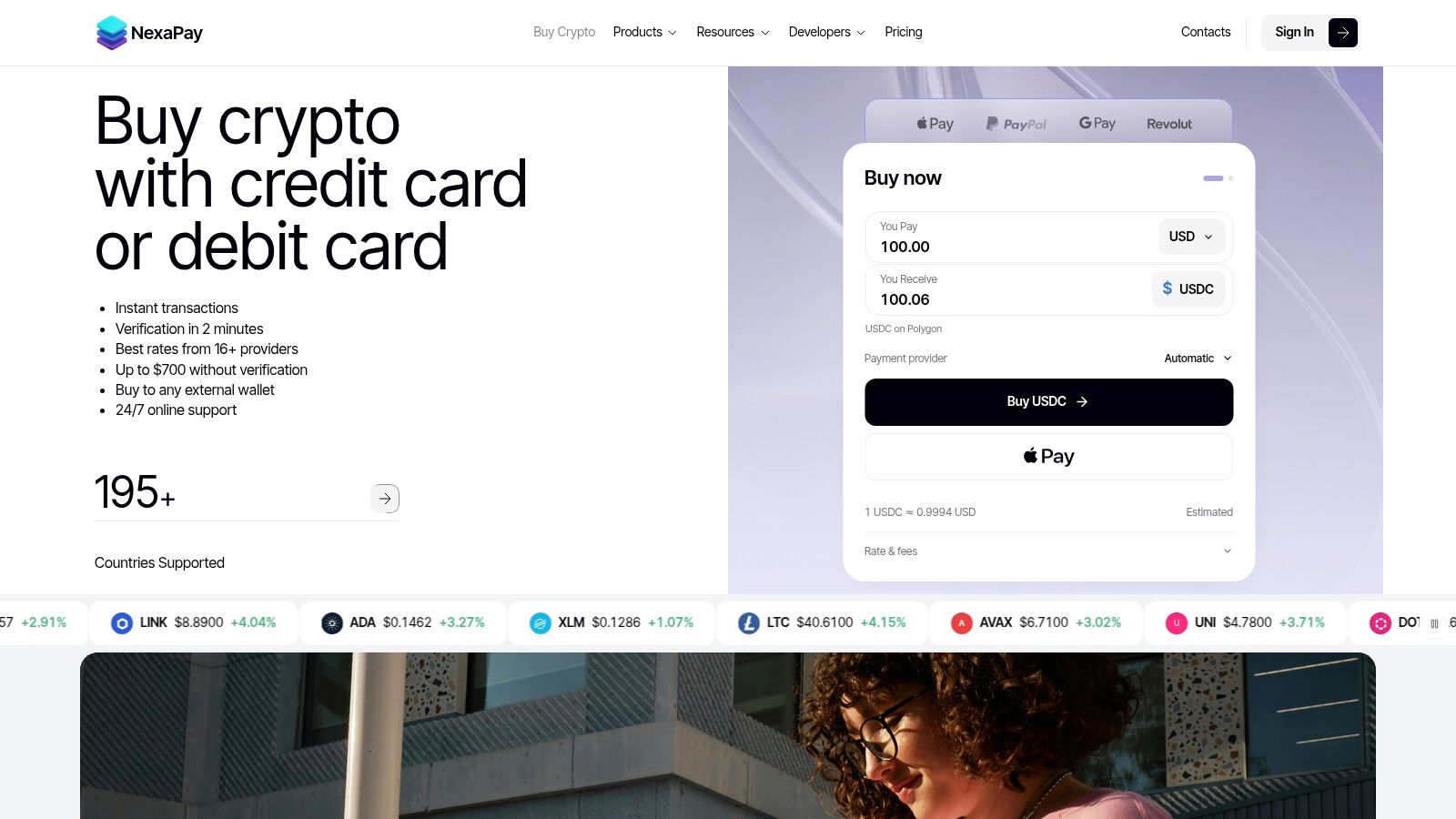
NexaPay Instant accepts Visa, Mastercard, American Express, Apple Pay and Google Pay through supported provider checkouts, then settles USDC on the Polygon network to a wallet the merchant controls. The pricing material says crypto transfers are typically initiated within one to two minutes after payment confirmation. The site lists availability across more than 195 countries and claims 50,000+ active merchants.
The entry friction is low by design. A merchant can open an account with an email address and a payout wallet, add a business name if they want one, and start without uploading KYB documents for Instant. Payment providers may still verify customers at checkout, so buyer checks remain possible even when merchant paperwork is minimal.
The structural difference: a card dispute on a bank-payout account can pull back money weeks later. With Instant, licensed providers handle card disputes, confirmed blockchain payouts are final, and NexaPay says merchant chargebacks do not return to the merchant account.
Read it against the six criteria. Industry acceptance is explicit on the Enterprise plan, which lists iGaming, gambling, adult content, forex and crypto trading platforms. Processing coverage scales by tier: Starter includes 4 provider integrations and up to $10,000/month, while Professional lists 15 available providers, 2 coming soon, and up to $75,000/month. Fees and reserves need written confirmation because provider and network costs depend on method, region and checkout provider. Support moves from email on Starter to priority 24/7 coverage on Professional.
- Direct crypto settlement: funds go to a wallet you control, with transfers typically initiated within one to two minutes of confirmation.
- Familiar checkout: cards, Apple Pay and Google Pay through supported providers, subject to provider and regional availability.
- Low-friction buyers: basic consumer purchases do not require an account, and supported assets include Bitcoin, Ethereum, USDT, USDC and Solana.
- Card data stays with the provider: PCI DSS Level 1-certified processing with 256-bit encryption, and NexaPay says it never stores card details.
Cons to weigh before you commit.
- Variable terms: availability, methods and customer verification vary by provider, region and transaction.
- Tier limits define coverage: provider count, monthly processing ceiling, analytics, webhooks and support level change sharply between plans.
- Flow isn't live yet: native checkout, fiat-to-crypto payments, 600+ providers, smart routing and automatic fallbacks are listed as coming soon, so don't build a launch plan around them.
If you're still deciding whether you need a specialist account at all, this walkthrough of what a high-risk merchant account is covers the underwriting basics before you compare settlement models.
2. PaymentCloud
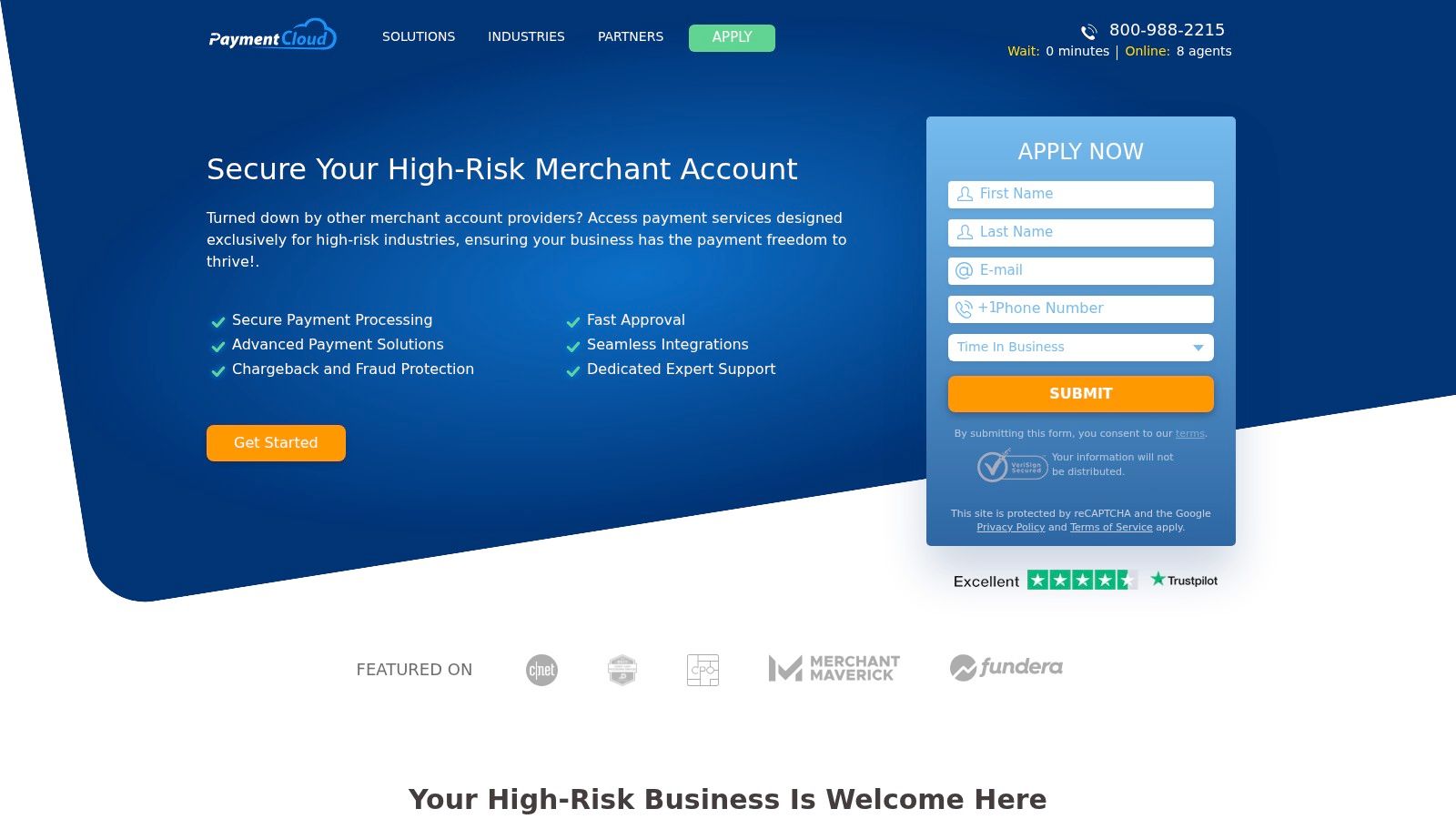
Ask PaymentCloud what it does and the honest answer is matchmaking. It carries your risk profile to its acquiring partners, then wraps the placed account in gateway plumbing: shopping-cart and CRM integrations, recurring billing, invoicing, an account updater for expired cards, fraud and chargeback tooling, and ACH or e-check acceptance. For a storefront already running on a platform stack, that plumbing is the product.
The demand for it keeps growing. Riskified's 2024 Chargeback Challenges report found that 76% of chargeback managers saw volumes hold steady or climb year over year in 2024. When volumes rise, the bank behind your account tightens its terms, and the paperwork protects you long after the sales call ends.
Verify before signing: the acquiring bank's name, your approved MCC, the reserve percentage and release schedule, and the termination notice period. Approval timing and funding timing are different clocks.
A placed account is still bank-sponsored card acquiring. The bank owns your risk, watches your dispute ratio, and sets the cap on what you can process. Approval speed depends on how clean your document package is, and customers frequently praise the communication and hands-on onboarding. Pricing is where comparison shopping stalls: high-risk rates are quote-based with no published rate card, and some reviewers report communication gaps or reserve questions that never got a straight answer.
PaymentCloud's high-risk merchant account page is the right starting point. Treat the first quote as an opening position, and get the reserve schedule in writing before you weigh it against any alternative.
3. PayKings
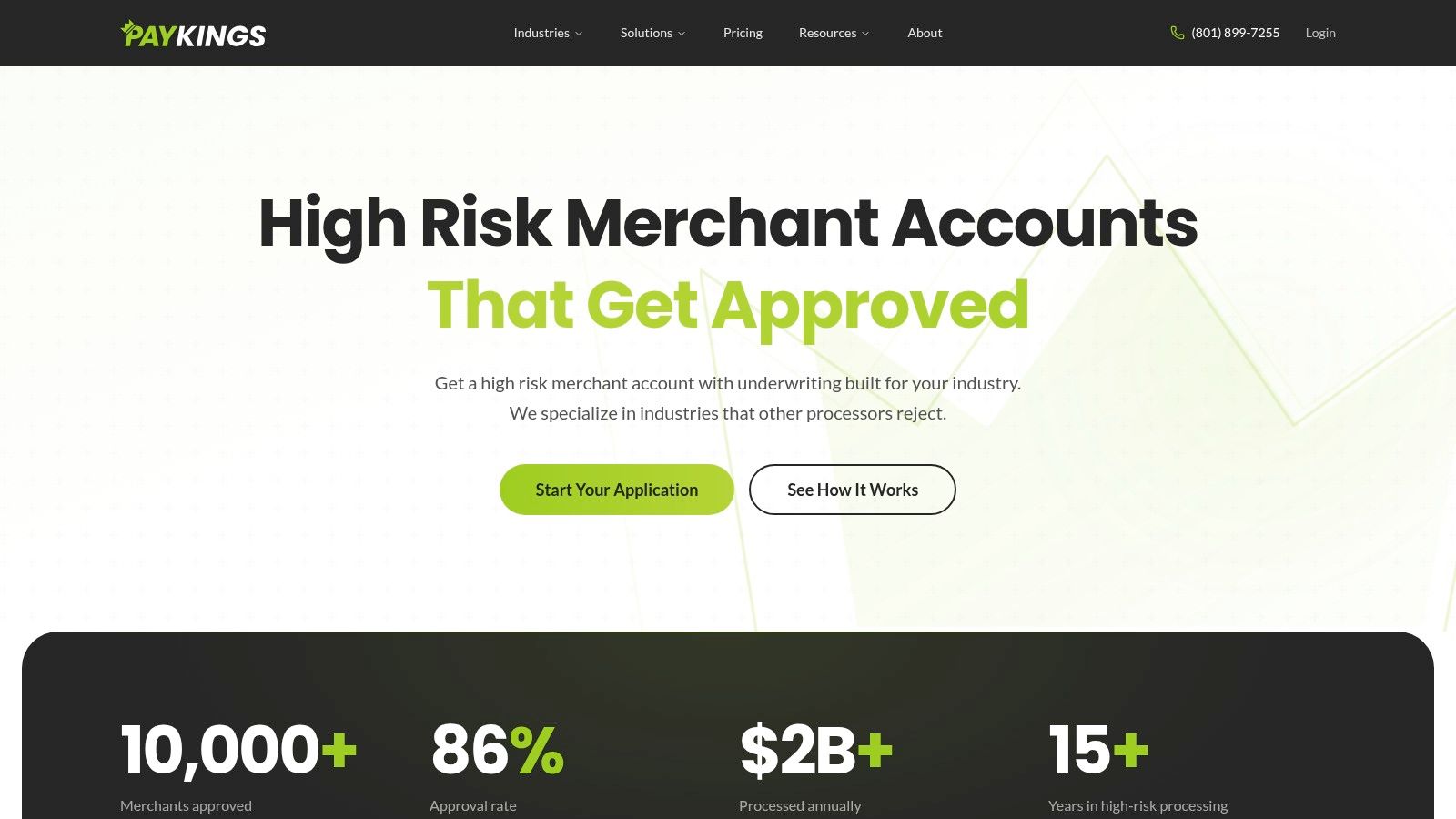
PayKings is a pure high-risk specialist. It says it works with more than 20 banking partners across 50-plus industries, listing online gaming, adult, crypto, forex, supplements, travel, and firearms among them. Breadth is the pitch. Eligibility is still a bank decision, and an industry list is not a promise for your specific model or jurisdiction.
The threshold that decides your year
Dispute math is where high-risk accounts die. Mastercard's 2025 State of Chargebacks report schedules its excessive-dispute threshold to move from 1.5% beginning October 1, 2025 to 0.9% beginning January 1, 2026, with a $10 fee per disputed transaction for merchants above the applicable limit. That same report puts fraudulent chargebacks, first-party and third-party fraud combined, at about 45% of global merchant chargeback volume.
Ask a prospective provider two questions before you apply: what scorecard flags my account, and at what ratio do you add a reserve. Vague answers mean surprises later.
PayKings publishes interchange-plus tiers and says it charges no setup fee, which is rare enough to note. Gateway options include Authorize.net, NMI, and USAePay, with REST API and ecommerce integrations, and Trustpilot shows 4.4/5 from 102 reviews with onboarding help mentioned often.
- Fiat settlement only: crypto-related card processing settles to a bank in fiat, not in cryptocurrency, so the chargeback liability stays with you.
- Coverage isn't eligibility: sector lists don't guarantee approval for a specific business.
- Ratings diverge: the BBB lists PayKings as not accredited with no rating, and some reviewers describe problems after approval.
If you want the difference between an ISO, a processor, and a bank spelled out before you apply, this breakdown of high-risk merchant account services is worth ten minutes. Details are on PayKings' high-risk processing page.
4. Easy Pay Direct
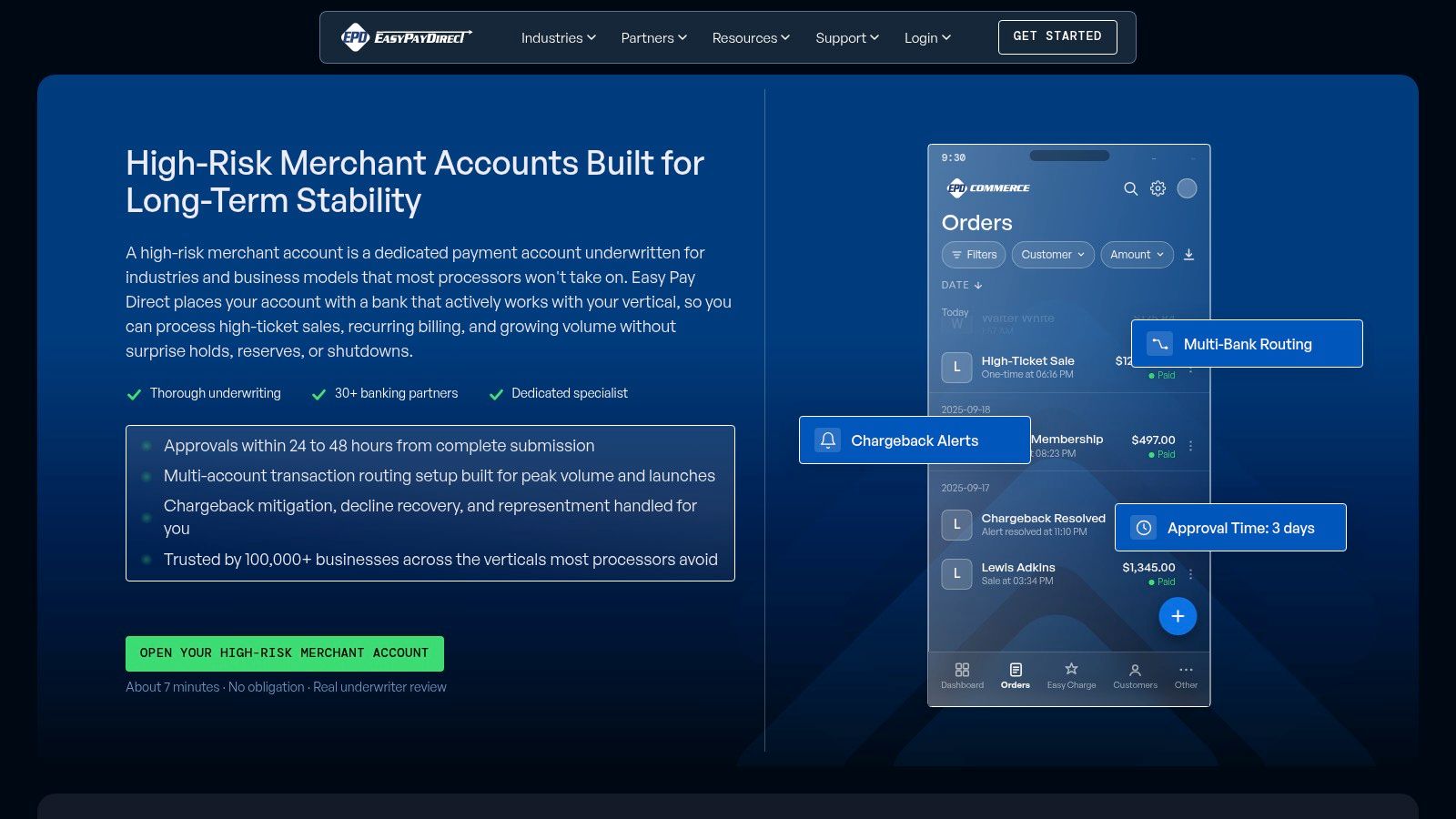
One vendor for both gateway and merchant account removes the finger-pointing when payments fail. Easy Pay Direct sells exactly that: high-risk placement paired with its own gateway, which suits subscription and online sellers who want a single integration for checkout, recurring billing, and dispute tooling. The account lands at one of the 30+ banking partners the company lists on Easy Pay Direct's high-risk page, and which bank you get determines the terms you sign.
Volume makes decline recovery a numbers game. Fit Small Business's chargeback statistics count roughly 238 million chargebacks globally in 2023 at an average rate of 0.56%, about 5.6 disputes per 1,000 transactions. The same source cites a 2022 forecast of $12.6 billion in U.S. card-fraud losses, with card-not-present fraud at roughly 72% of it. Remote revenue sits squarely in that risk category, which is why the built-in decline recovery and chargeback tooling carry real weight here.
Know what the retry engine touches: retrying a soft decline is routine. Retrying a card that already failed a risk check invites issuer scrutiny and pushes your decline rate the wrong way. Ask which declines the tool retries and which it leaves alone.
Scored against the six criteria, the picture splits. Coverage and tooling are the draw, and published base pricing gives you a benchmark before the bank's quote arrives. Support is where reports diverge: some merchants praise the account management, others describe a rougher ride once the account is live. Contract terms stay opaque until underwriting returns your quote, so the published rates function as a starting point rather than the offer.
Independent reviews on Trustpilot and the Better Business Bureau are mixed, and the BBB rating reflects unanswered complaints, so check both sources yourself before signing. Then compare the written offer against the contract, line by line, because the website's numbers are the opening bid, not the deal.
5. SoarPay
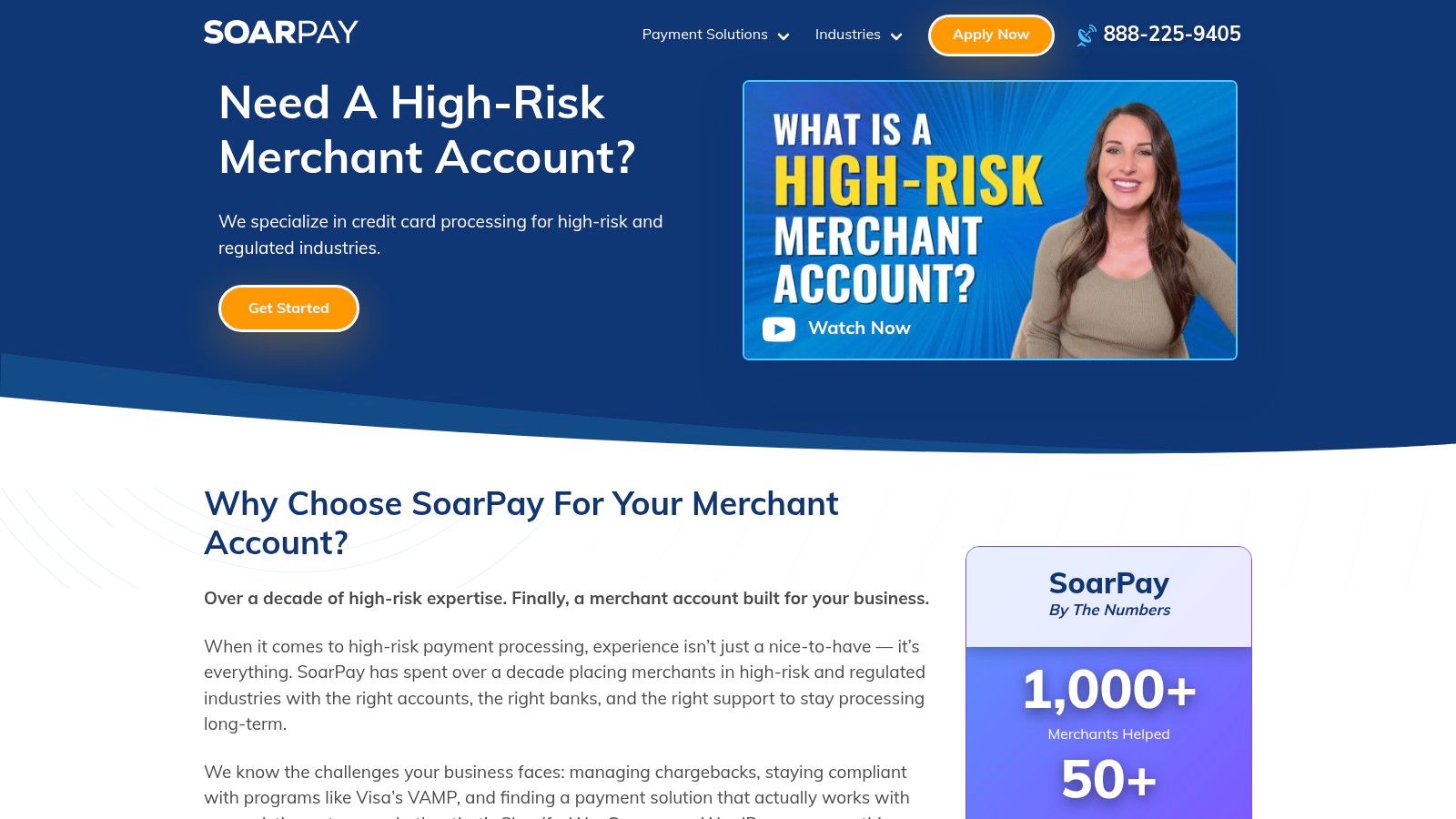
SoarPay is a placement play, not a rate play. It puts merchants in supported high-risk and regulated categories, then matches the account to a compatible gateway instead of forcing one stack. The useful part is the underwriting posture: approval, reserves, and pricing are set by bank appetite and merchant risk, so judge it on acceptance, coverage, reserve language, support, and contract terms before you judge the quote.
Cost per dispute is why placement details matter more than the headline rate. Mastercard's 2025 chargeback cost analysis puts the average chargeback amount at about $99 for high-risk categories such as gambling, gaming, and crypto exchanges, compared with $77 for digital goods and $69 for subscriptions. A 1% dispute rate on 10,000 monthly transactions produces 100 disputes; at the $99 high-risk average, that is roughly $9,900 in disputed principal before fees, representment costs, and lost goods.
Reserve math to run yourself: 5% held for three months and 10% held for six months are wildly different working-capital problems, even though both sound like "a small reserve." Ask for the percentage, the cap, and the release dates as three separate answers.
- Stack flexibility: a placed merchant account plus a gateway can fit an existing checkout better than a closed all-in-one.
- Underwriting first: reserves are disclosed as risk-based rather than promised away.
- Contract layer: ask whether SoarPay, the gateway, or the acquiring bank owns each term in writing.
The limits are real. Some categories remain outside appetite, high-risk pricing is quote-driven, and approval timing depends on underwriting rather than a marketing window. Get the reserve schedule, termination rights, payout timing, and dispute workflow in the written offer.
Because SoarPay sits between you and the bank, know which layer you're contracting with. This explainer on what a payment facilitator is covers why that distinction decides who holds your money. Start at SoarPay's high-risk merchant accounts page.
6. Durango Merchant Services
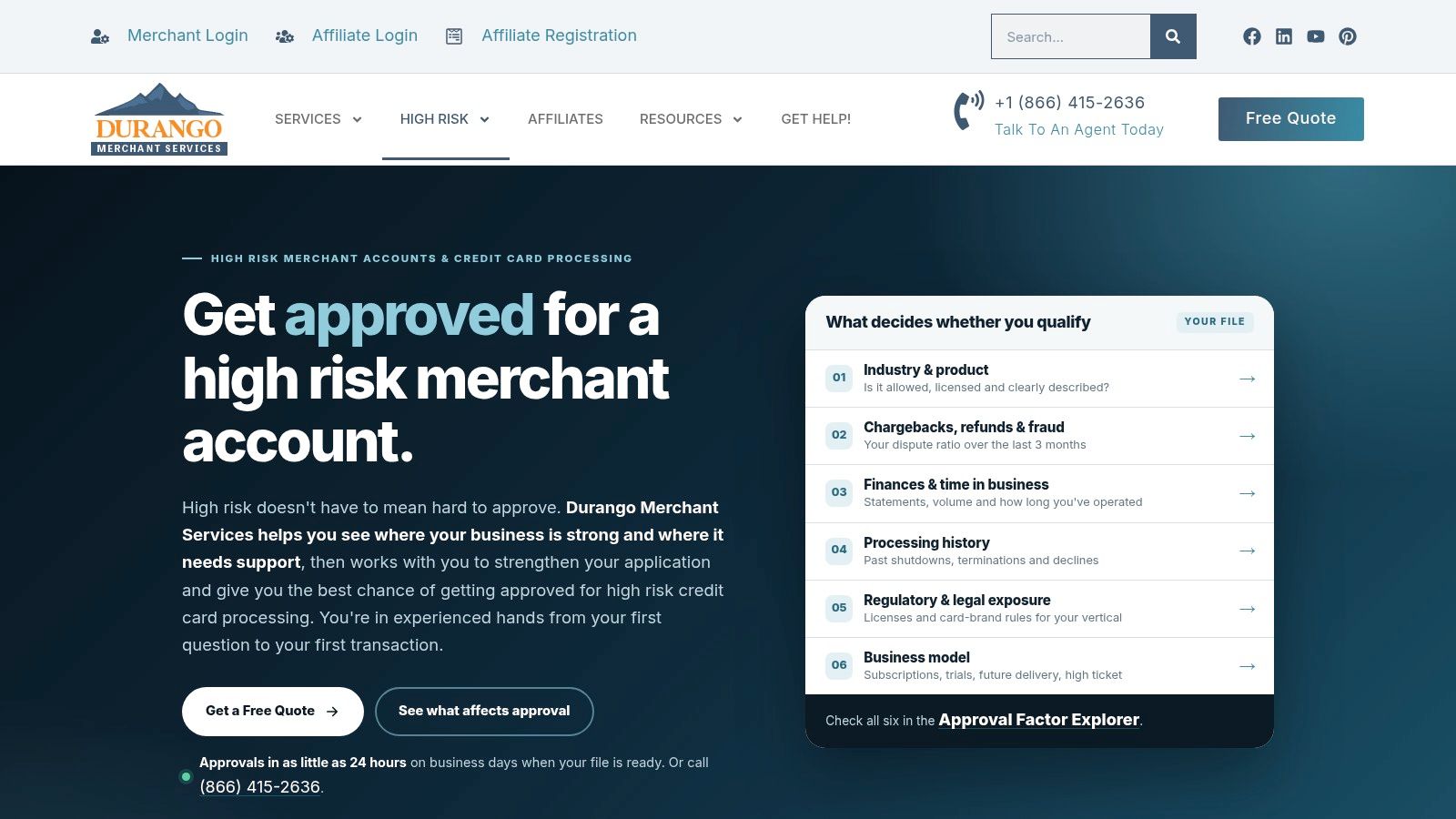
Durango is the international option here. It places high-risk merchants in multiple countries, subject to country restrictions and underwriting, and offers gateway services, multi-currency processing, and a cryptocurrency payment product where customer crypto is converted to local currency and deposited into the merchant's bank. That reverses the card-to-crypto model: fiat lands in your bank, while you carry the conversion exposure and dispute liability.
Where Durango earns its place
Cross-border placement is the hard part. Travel, subscriptions, and forex education or software all need banks that accept the category in your jurisdiction. Durango also publishes indicative pricing ranges and possible reserve terms rather than forcing every prospect into a blind quote. Treat those figures as a negotiating range, not a final offer.
The broader risk is still rising. Mastercard's 2025 chargeback outlook projects global chargeback losses increasing from $33.79 billion in 2025 to $41.69 billion in 2028, which makes reserve terms and dispute ownership more important than a headline rate.
The trade-off: wider international placement can solve acceptance, but it does not remove chargeback exposure when settlement ends as fiat in your bank.
- International reach: placement across multiple countries, subject to restrictions.
- Processing coverage: gateway services, multi-currency acceptance, and a crypto payment option.
- Published ranges: indicative pricing and reserve terms give you a concrete basis for comparison.
Reviews are mixed, and customer-service complaints recur. Check Durango's current rating and accreditation status directly before signing. Pricing varies by country, bank, and business model, minimum processing requirements may apply, and not every forex or crypto-related model is accepted. Start with Durango's high-risk merchant account page, then get the acquiring bank's fees, reserve schedule, and contract term in writing.
7. Host Merchant Services
Host Merchant Services is a general merchant services provider that will take a high-risk application through partner relationships. That's the distinction that matters most: in a partner-based model you may not be contracting with HMS's own bank at all, so identify the processor, the acquiring bank, and the counterparty on the signature line before you sign.
The market splits here. A 2026 payment processing industry compilation reports that 75% of high-risk businesses have moved beyond single-provider setups, while only 15.6% of regulated businesses describe their payment routing as highly advanced. Redundancy is common. Competent routing isn't. Holding two accounts you can't fail over between is a false comfort.
- Range: ecommerce, POS, mobile, and gateway options under one relationship.
- Transparent standard pricing: interchange-plus examples are published for retail, restaurant, and ecommerce accounts.
- Support: Trustpilot shows 4.0/5 from 64 reviews, with reviewers often praising access to helpful staff.
The catch is that those published interchange-plus examples are standard rates, not high-risk rates. Approval and high-risk pricing depend on your profile and the partner, some high-risk categories fall outside scope, and the partner model makes contract due diligence mandatory rather than optional. Ask for the bank's name in writing. Review Host Merchant Services' high-risk page with those questions in hand.
High Risk Merchant Services at a Glance
Published pricing tells you less than it appears to. Start with the settlement column, because it decides who holds your money, who absorbs a dispute, and how much of the approval column will matter to you.
| Best for | Settlement model | Pricing transparency | Approval & terms |
|---|---|---|---|
| NexaPay, merchants seeking direct crypto payouts and consumers buying crypto with familiar payment methods | USDC settles on Polygon to merchant-controlled wallets; consumer purchases go to external wallets | Provider and network costs typically 1–4%; subscription tiers publish provider counts and monthly caps rather than a rate card | Merchants start with an email and a payout wallet, with no approval queue; providers may verify buyers at checkout |
| PaymentCloud, high-risk ecommerce and retail merchants needing integrations | Card and other payment processing through acquiring partners | Quote-based; no standard published rate card | Approval, reserves, limits, and settlement depend on underwriting and acquiring bank |
| PayKings, businesses in supported high-risk industries seeking card processing | Fiat settlement, including for crypto-related card processing | Publishes interchange-plus tiers; final terms subject to underwriting | Eligibility varies by business and jurisdiction; review reserves, fees, and termination terms |
| Easy Pay Direct, online and subscription businesses needing a gateway and merchant-account placement | Merchant-account processing; settlement terms vary by bank and risk profile | Publishes base pricing for standard accounts; the high-risk quote comes out of underwriting | Terms depend on bank, industry, location, volume, and risk profile |
| SoarPay, supported high-risk merchants seeking gateway and platform compatibility | Merchant-account processing through matched providers | Quote-based; no public rate card | Underwriting applies; some ultra-high-risk industries are unsupported; the stated 48–72-hour timeline is not guaranteed |
| Durango Merchant Services, international high-risk merchants and businesses needing multi-currency options | Crypto payments are converted to local currency and deposited to the merchant's bank | Publishes indicative pricing and reserve figures; final numbers are set in underwriting | Country and business restrictions apply; underwriting and possible minimums vary |
| Host Merchant Services, merchants seeking broader ecommerce, POS, and payment services | Processing through partner providers for high-risk accounts | Standard pricing examples are published; high-risk pricing is custom | Approval and terms depend on merchant profile and partner; verify the provider, bank, and contract party |
On card-to-crypto settlement, the approval column shrinks. Card disputes are handled by the licensed payment provider and confirmed blockchain payouts are final, so a chargeback never lands on the merchant's account.
Choosing Your Provider: A Decision Checklist
Work the six criteria in order, because each one can disqualify a provider before the next matters. Neutral underwriting guidance from Tom Berg Partners makes the point that reserves, delayed settlement, transaction limits, and termination risk belong in your operating model, not in the fine print. Sales spikes are a common trigger for account review, so clarify termination rights and notice periods before signing.
- Industry acceptance. Get your product category and MCC approved in writing by the bank, not the salesperson.
- Processing coverage. Confirm the countries, currencies, and payment methods you need, and whether falling back to a second provider is possible.
- Fees. Compare quoted rates against published ranges using the same volume and card mix. Separate the rate from the reserve.
- Reserves. Ask who legally holds the reserve, what triggers a hold, whether release dates are fixed or discretionary, and what happens after closure.
- Support. Test responsiveness before you commit. Send a real question about a dispute deadline and time the answer.
- Contract terms. Read the termination clause, the migration rights for tokenized credentials and recurring billing, and the dispute-response ownership.
For lawful high-risk businesses, NexaPay's Enterprise plan is built for sectors such as iGaming, gambling, adult content, forex, and crypto trading platforms, and its Instant product settles crypto to your own wallet with no merchant chargebacks on completed settlements. That's a materially different risk profile from a bank-payout account, where a dispute can reach back into settled funds.
Whichever option you choose, run one small test transaction, reconcile the settlement end to end, and only then move real volume.
Most merchants in high-risk categories lose revenue to a settlement model they never chose, not to a rate they negotiated badly. NexaPay connects conventional payment methods such as cards, Apple Pay, and Google Pay to cryptocurrency settlement, so completed payments land in a wallet you control instead of a bank account a dispute can reach back into. If your business is lawful and your current processor treats you like a problem, visit NexaPay to see which plan fits your category and volume.