What Makes a Good Payment Gateway: 7 Options for 2026
What makes a good payment gateway in 2026? Compare 7 fiat-to-crypto gateways by settlement, regions, methods and onboarding to pick the right fit.
What do you need a good payment gateway to do: accept cards and settle in crypto, help customers buy cryptocurrency, or route payment methods that work in their region? Those are different jobs. Choosing by brand recognition or headline fees can leave you integrating a capable product that moves money in the wrong direction.
A good payment gateway is the one that matches your money flow. A merchant selling software and receiving stablecoins needs a different setup from a wallet app helping users purchase Bitcoin. A crypto-only store has another requirement entirely: collecting assets customers already own.
The options below are judged against business model, regional coverage, payment methods, and settlement flow, not given artificial numerical scores. Start by identifying who's buying what, where the buyer lives, how they'll pay, and whose wallet or bank account receives the proceeds. Then compare implementation effort, verification requirements, and failure handling. That sequence produces a more useful shortlist than searching for a universal winner.
1. NexaPay
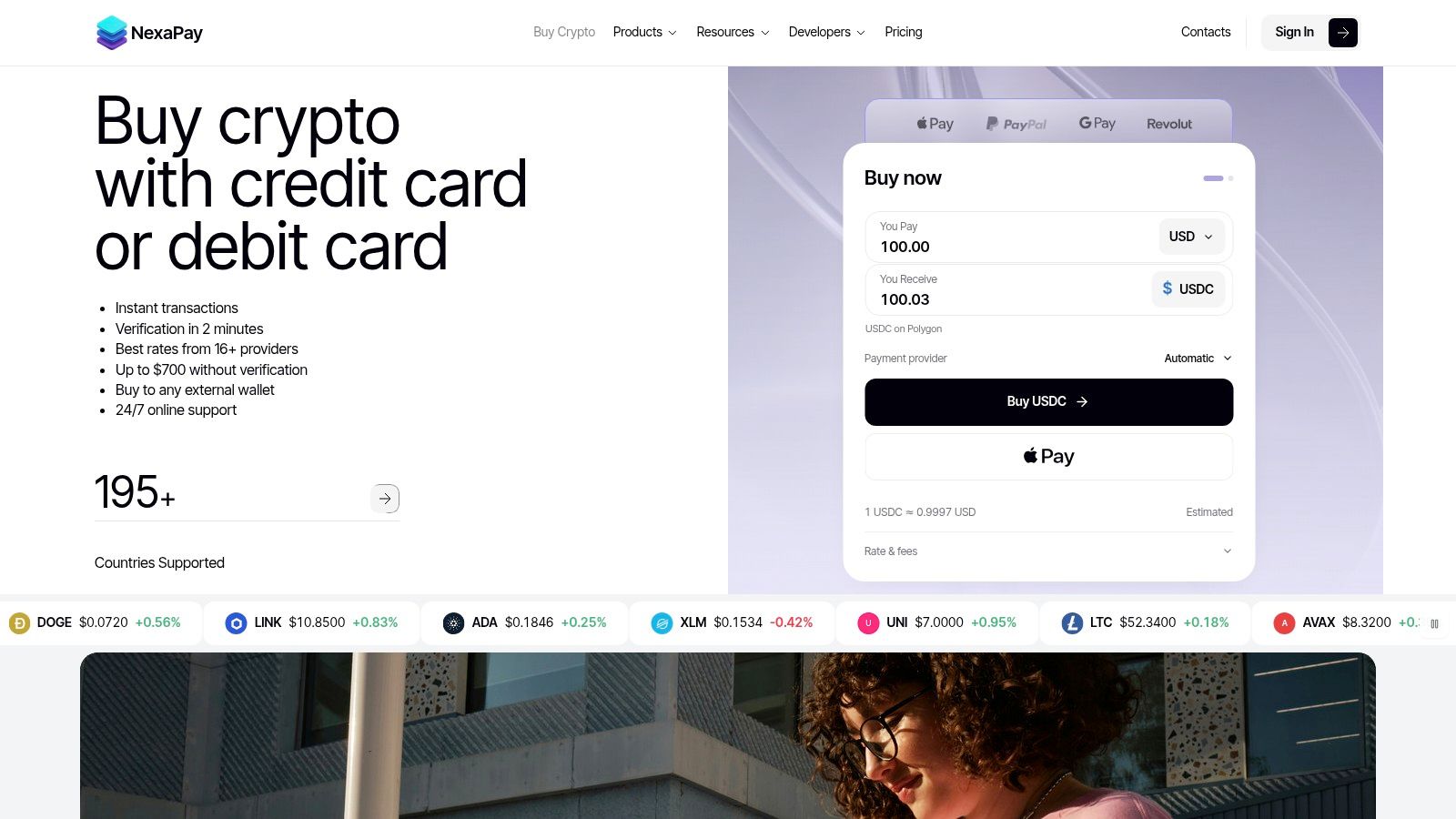
Best fit for merchants who want familiar payment methods with cryptocurrency settlement. Our setup connects merchant websites with independent, licensed payment and cryptocurrency providers. Customers complete payment through a provider's checkout, while the merchant receives cryptocurrency in a configured wallet.
That's different from merely adding a crypto-buying button to an app. For individuals, our purchasing service sends supported cryptocurrencies to an external wallet; basic consumer purchases don't require an account. Merchants do need an account to accept payments.
How the fit breaks down
- Business model: Our merchant offering suits businesses seeking fiat-funded sales with crypto receipts. Supported high-risk businesses can access Enterprise support, while eligibility still depends on the participating provider.
- Regional coverage: Our stated availability spans more than 195 countries, but individual providers can impose additional requirements. Treat country coverage as the starting filter, not a guarantee that every checkout method will appear.
- Payment methods: Buyers can use cards, Apple Pay, Google Pay, and other supported methods according to region and provider.
- Settlement flow: Cryptocurrency goes to the merchant's wallet rather than relying exclusively on a conventional bank payout. Confirm the asset and network before accepting live orders.
The trade-off is provider dependence. Our Instant product uses third-party checkouts, so customers may encounter provider-specific verification and checkout screens. Our no-merchant-KYC setup doesn't mean buyers are universally exempt from identity checks.
We use PCI DSS Level 1-certified payment providers and never store card details. That's useful separation, but merchants still need secure account access, reliable order handling, and clear refund procedures.
Operational distinction: Multiple available providers aren't the same thing as tested automatic failover. NexaPay Flow's planned native checkout and automatic fallback capabilities are marked as coming soon, not capabilities to assume are available through Instant.
I'd shortlist this model when receiving crypto is a treasury requirement, not an extra payment badge.
2. MoonPay Commerce
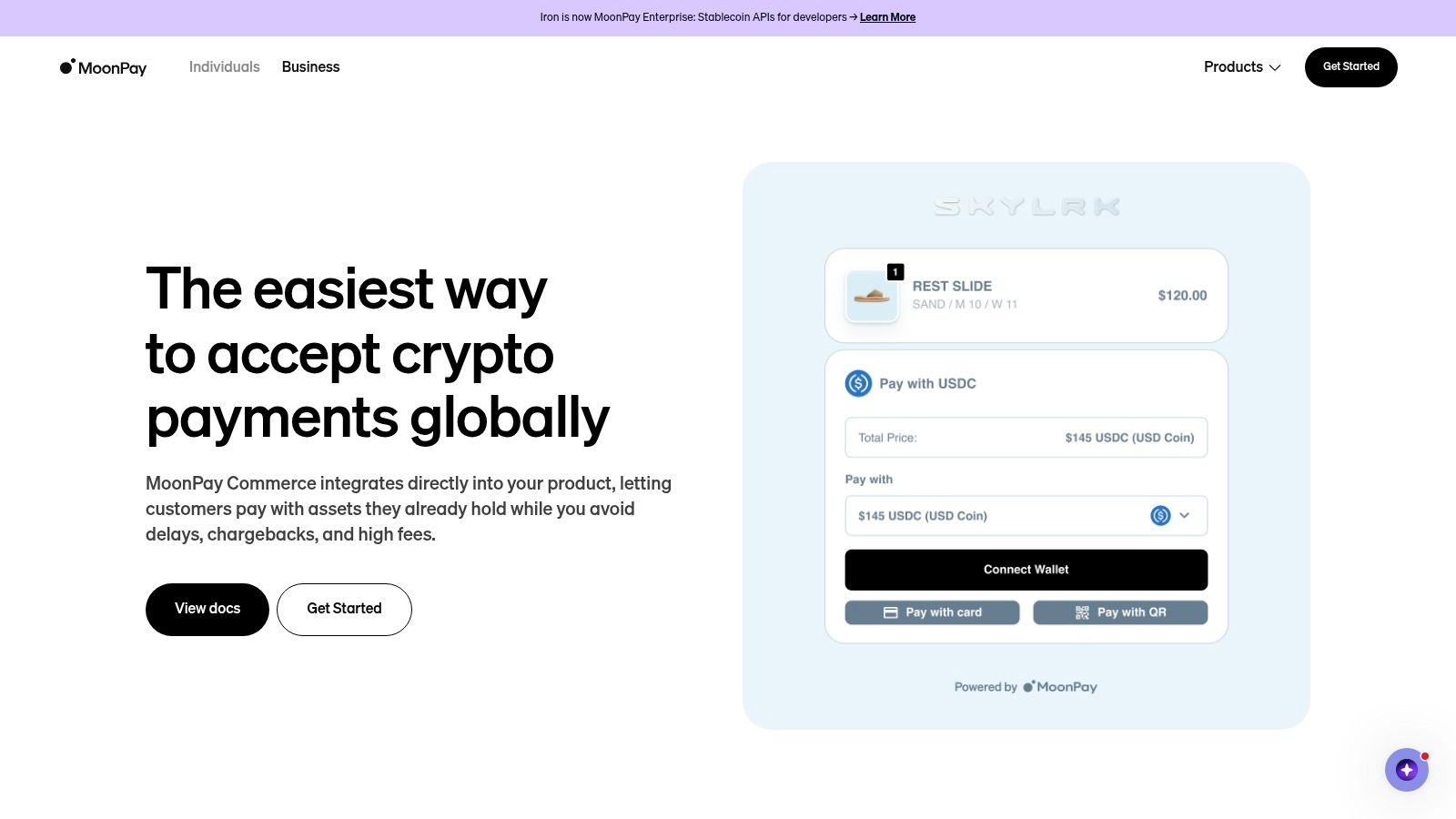
A merchant selling memberships through payment links has different needs from a wallet offering crypto purchases. MoonPay Commerce belongs on the shortlist for the former: merchant crypto checkout, payment links, subscriptions, and a card-payment option.
Its attraction is settlement choice. Supported configurations can settle in cryptocurrency, stablecoins, or fiat, which makes it relevant when the finance team hasn't committed to holding every receipt in digital assets. Availability still depends on merchant location, configuration, and use case.
Compare the actual checkout configuration
- Business model: A merchant-facing option for checkout, payment links, and subscriptions, rather than only customer wallet funding.
- Regional coverage: Establish merchant eligibility and customer availability separately. An integration option doesn't establish approval for your legal entity or industry.
- Payment methods: Crypto checkout and card-funded purchases can serve different buyer preferences. Verify which are enabled in your configuration.
- Settlement flow: Compare the supported payout asset with the currency your business needs for payroll, suppliers, and refunds.
Web, app, and Shopify integrations offer different implementation paths. Don't assume subscription support means every card or crypto payment can renew unattended; establish how authorization, renewal, cancellation, and failed collection work.
The drawback is commercial uncertainty before configuration. Public materials don't provide one universal merchant fee, so compare the complete quote, including conversion and settlement costs. Businesses in restricted categories should distinguish product functionality from underwriting approval, especially when comparing high-risk merchant account services.
Verdict: Consider MoonPay Commerce when merchant checkout and settlement flexibility matter more than a narrowly focused on-ramp.
3. Mercuryo
Mercuryo is an on-ramp, not a substitute for every merchant payment flow. Mercuryo offers a hosted widget and API for platforms that want customers to purchase cryptocurrency and receive it in a wallet. That makes it a clearer fit for wallets and Web3 applications than for a store seeking ordinary card-sale proceeds in crypto.
For business model, start with the purchased product: the customer is buying cryptocurrency. For settlement flow, the destination is the customer's wallet, not automatically the platform's sales-revenue wallet.
Evaluate methods at the country level
Mercuryo supports cards, Apple Pay, Google Pay, and selected local payment methods, subject to availability. The importance of wallet support isn't theoretical: Worldpay's digital-wallet analysis reports that wallets represented 56% of global e-commerce transaction value in 2025, across its covered markets.
That benchmark doesn't prove which method your users prefer. Use it as a reason to test wallet presentation on eligible devices instead of treating a card form as sufficient.
- Regional coverage: Validate the combination of buyer country, fiat currency, asset, and destination network.
- Verification: Customers may need identity checks, so include that step in your purchase-funnel expectations.
- Integration: Choose the hosted widget when a quicker implementation matters; choose an API-led approach when you need more control and can maintain it.
Verdict: Shortlist Mercuryo for embedded customer crypto purchases. Don't select it on the assumption that an on-ramp automatically provides merchant acquiring, recurring billing, or crypto settlement for unrelated goods.
4. Transak
Choose Transak's integration path before estimating the project. Transak offers a prebuilt widget and a white-label API for embedded crypto purchases. The widget gives developers a defined purchase flow; a customized API implementation creates more responsibility for interface behavior, error handling, and ongoing maintenance.
Its business-model fit is an app or platform enabling end-user cryptocurrency purchases. Its settlement flow delivers purchased crypto through that journey, rather than turning ordinary merchant card sales into wallet payouts by default.
Don't confuse a successful sandbox purchase with production eligibility. Transak requires business verification for production API access.
What to test before launch
- Regional coverage: Build test cases around your actual customer countries, currencies, assets, and networks. Broad catalog coverage won't help if a required combination is unavailable.
- Payment methods: Check cards, bank transfers, Apple Pay, Google Pay, and regional methods individually. Fees and availability depend on the market and transaction.
- Purchase recovery: Test identity-verification interruptions, abandoned redirects, delayed payments, and return visits before approving the experience.
Checkout deserves that attention: Baymard's checkout-usability research places average global cart abandonment at 70.19%. That's an e-commerce benchmark, not a Transak result, but it's a useful warning against treating interface quality as secondary.
Keep the selected asset, amount, and wallet address recoverable when customers encounter an error. Never interpret a browser return as sufficient proof that funds arrived.
Verdict: Transak suits teams choosing between a packaged on-ramp and a more customized implementation. Production approval and commercial requirements belong in the launch plan, not after development.
5. Banxa
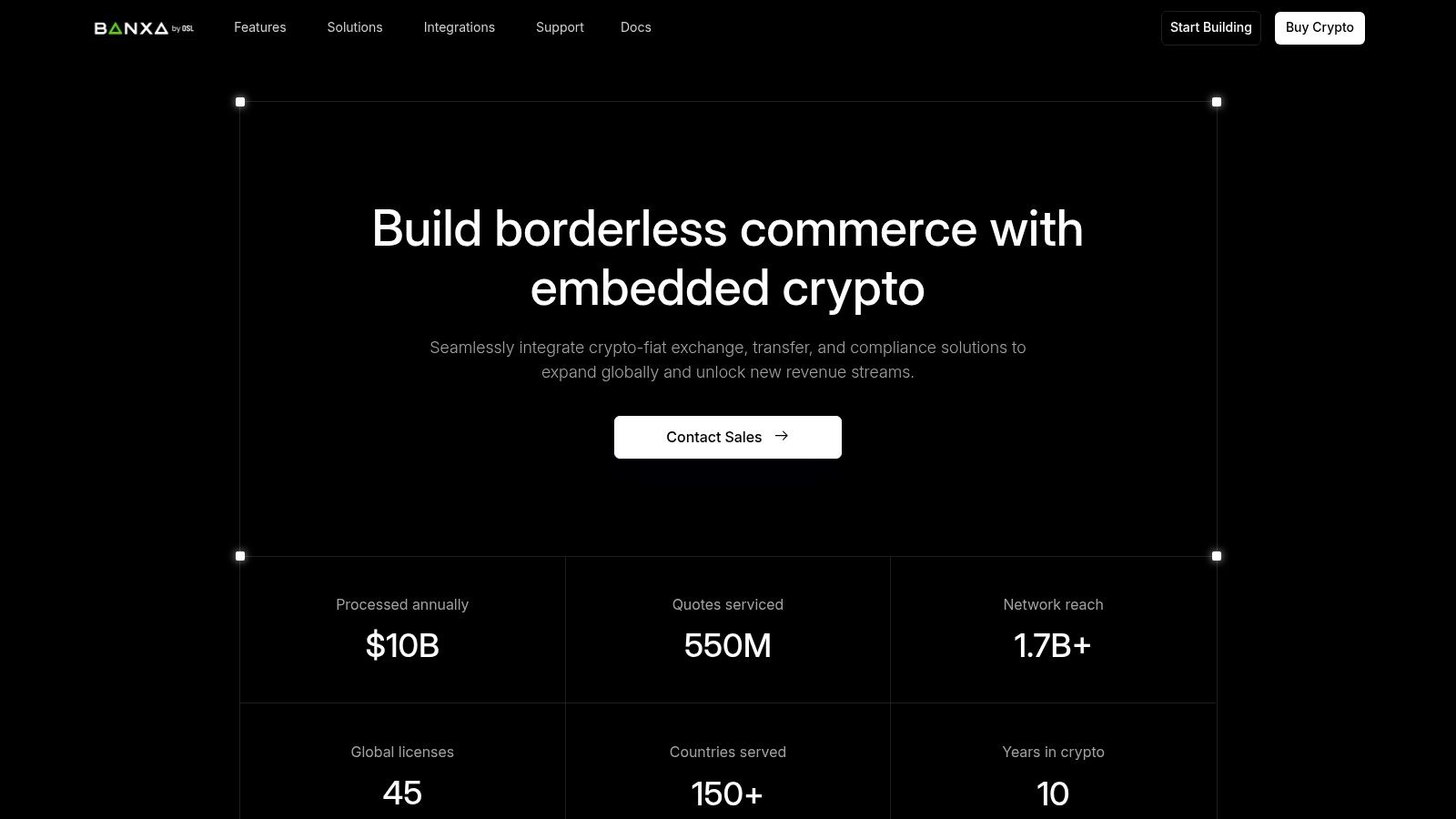
Outsourcing more of the purchase journey can be sensible when your team doesn't want to assemble payment processing, compliance checks, liquidity, and crypto delivery separately. Banxa combines those functions in a managed fiat-to-crypto checkout.
Its strongest business-model fit is a platform adding on-ramp access. Exchanges, wallets, and fintech applications can direct customers into a hosted purchase flow, with cryptocurrency delivered to a customer-provided or partner-specified wallet address. That destination must match the intended transaction, not merely a technically valid address.
Managed checkout still needs operational ownership
For regional coverage, validate the buyer's location alongside partner configuration. For payment methods, check the applicable cards, bank transfers, Apple Pay, Google Pay, and local options. For settlement flow, establish who receives the cryptocurrency and how your platform learns that delivery completed.
- What works: A hosted flow can reduce the amount of payment and compliance infrastructure your team must build.
- What needs care: Customer verification, partner onboarding, and regional restrictions still affect completion.
- What to document: Assign responsibility for pending payments, failed delivery, refunds, and customer support before launch.
Resilience deserves a commercial review too. A BR-DGE survey of enterprise e-commerce decision-makers found that 92% experienced a payment outage or disruption during the previous two years.
That finding isn't a claim about Banxa's reliability. It's a reason to require a clear incident process from any managed provider and ensure your app can display a pending state without prompting duplicate purchases.
Verdict: Banxa is worth evaluating when outsourcing the on-ramp journey matters more than controlling every checkout screen.
6. Stripe Crypto Onramp
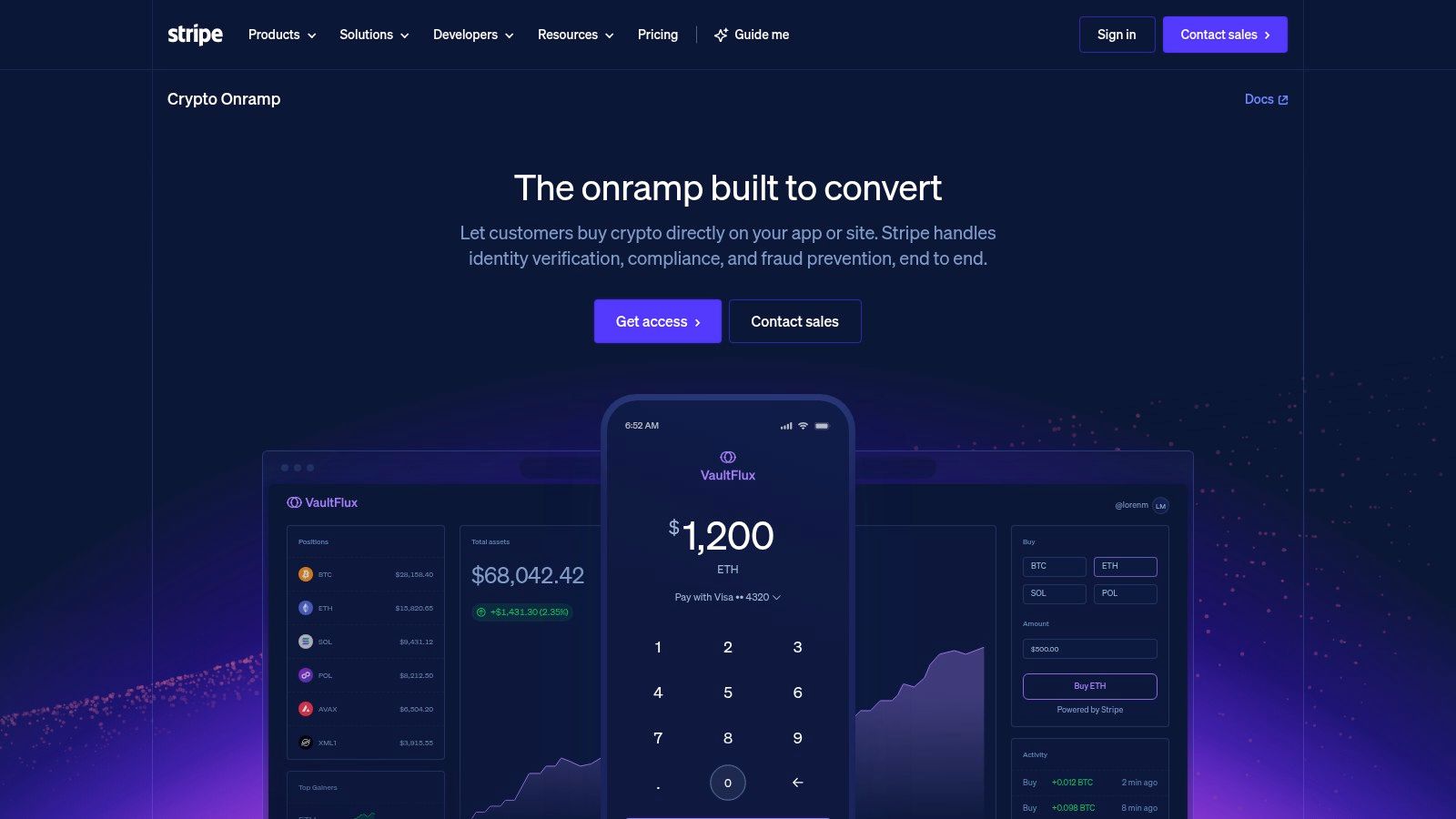
The product name matters here. Stripe Crypto Onramp enables end-user crypto purchases inside a partner's app or website. It isn't interchangeable with an ordinary Stripe merchant checkout, and it shouldn't be selected on the assumption that regular card sales will settle into your crypto wallet.
For business model, think customer wallet funding or embedded crypto purchasing. For regional coverage, confirm product eligibility separately from any existing relationship your business has with Stripe.
Judge the complete purchase journey
Eligible flows can support cards, Apple Pay, Google Pay, and ACH. Stripe also provides identity-verification and fraud-management support, while settlement depends on supported assets, chains, and regions.
- Implementation advantage: An embedded flow can keep the purchase experience within your product.
- Operational trade-off: Provider-managed payment and verification steps still introduce states your application must handle.
- Buyer communication: Explain what the customer is purchasing, which wallet receives it, and when you'll consider the purchase complete.
For customers asking whether they can buy Bitcoin with a credit card, distinguish a visible card option from a guaranteed approval. Provider eligibility, verification, and the issuer's decision still matter.
Fraud controls also need evaluation beyond the presence of a feature. The Merchant Risk Council's global payments and fraud report reports that 3.2% of global annual e-commerce revenue was lost to payment fraud in 2025.
Verdict: Consider Stripe Crypto Onramp for embedded purchases, then measure completion, verification abandonment, and legitimate declines. Don't confuse strong blocking with a well-balanced purchase funnel.
7. Cryptomus
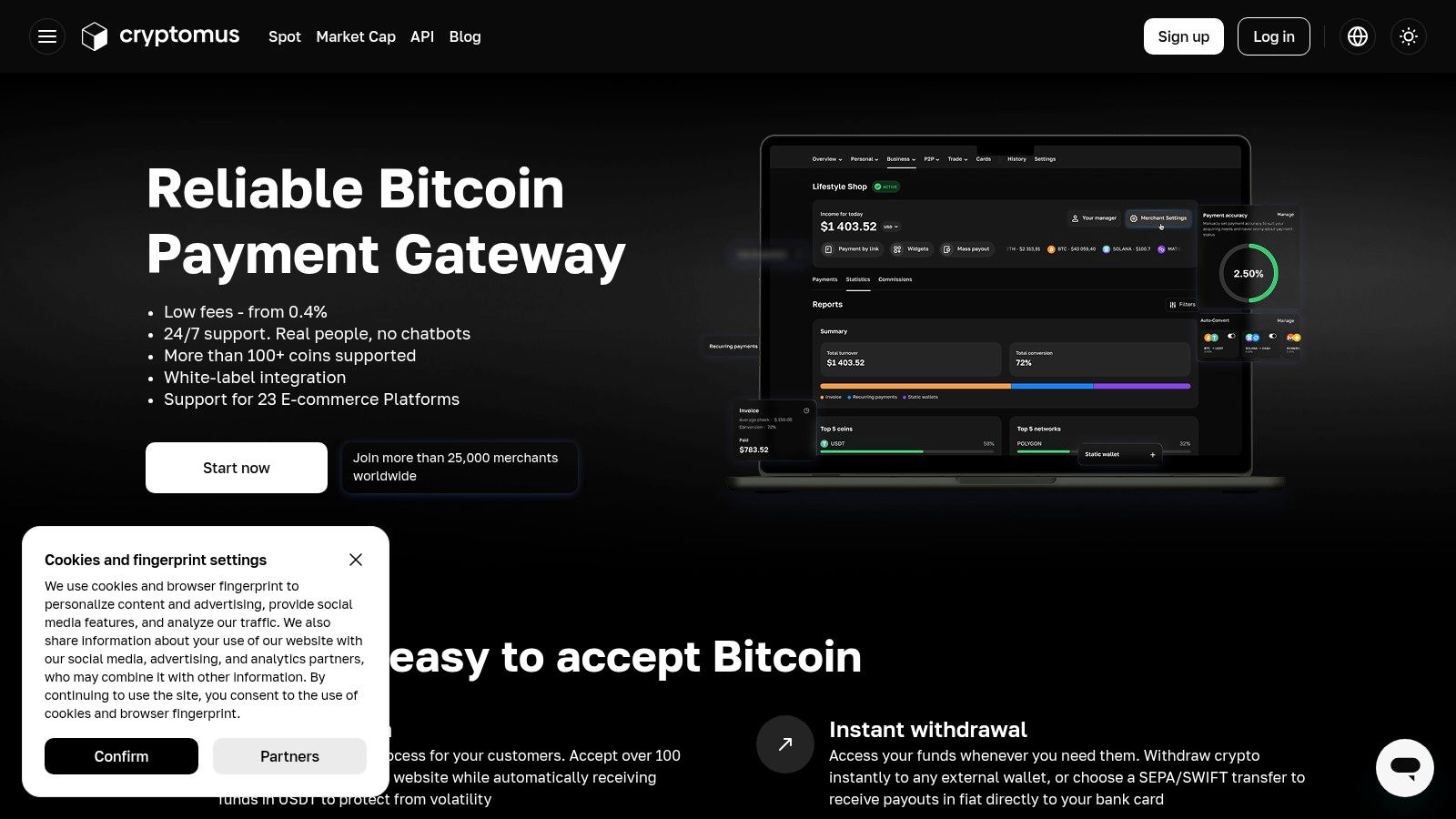
Already have customers who hold cryptocurrency? Cryptomus addresses that situation more directly than a fiat-to-crypto on-ramp. Its merchant APIs, e-commerce integrations, and white-label checkout support businesses collecting crypto payments.
The business model is crypto acceptance. Customers pay with assets they already own, rather than necessarily purchasing cryptocurrency by card during checkout. That distinction makes Cryptomus relevant to crypto-native buyers but not a direct replacement for card acquiring.
Start with the receiving asset
For settlement flow, evaluate auto-conversion into your selected crypto asset. This can reduce exposure to movements in the incoming asset, but it doesn't remove network, custody, liquidity, or destination-asset risk.
For payment methods, prioritize the coins and networks your customers use. A long asset catalog is less useful than reliable support for the network your buyers expect.
- Regional coverage: Confirm supported jurisdictions and withdrawal routes before enabling checkout.
- Integration choice: Use an existing commerce integration where it fits; use the API when your order lifecycle needs custom handling.
- Commercial review: Treat advertised rates as conditional until your business has an applicable quote.
Settlement rule: A payment isn't operationally complete until you can match the order, received amount, asset, network, and withdrawal record.
A crypto gateway also doesn't bypass industry restrictions. An adult-content business comparing an adult payment gateway should establish category eligibility, customer access, and withdrawal arrangements before building around any provider.
Verdict: Cryptomus fits crypto-paying customers and merchants comfortable managing crypto receipts. Choose a different category when your primary requirement is accepting fiat from buyers who don't own cryptocurrency.
7 Fiat-to-Crypto Payment Gateways Compared
| Item | Best for | Payment methods | Settlement | Integration |
|---|---|---|---|---|
| NexaPay | Crypto purchases and merchant payments settled in crypto | Cards, Apple Pay, Google Pay, PayPal, Revolut, bank transfers; availability varies | Crypto to external or merchant wallet; Polygon USDC option | Prebuilt checkout, provider-hosted checkout, white-label options |
| MoonPay Commerce | Merchant crypto checkout, payment links, and subscriptions | Crypto and card payments | Supported crypto, stablecoins, or fiat | Web, app, and Shopify integrations |
| Mercuryo | Adding crypto purchases to wallets, apps, and platforms | Cards, Apple Pay, Google Pay, selected local methods | Purchased crypto delivered to customer wallet | Hosted widget or API |
| Transak | Embedded crypto purchases in partner apps | Cards, bank transfers, Apple Pay, Google Pay, regional methods | Crypto delivered through the purchase flow | Widget or white-label API; sandbox available |
| Banxa | Outsourced fiat-to-crypto checkout for platforms | Cards, bank transfers, Apple Pay, Google Pay, selected local methods | Purchased crypto delivered to a specified wallet | Hosted checkout |
| Stripe Crypto Onramp | Embedded crypto purchases in apps and websites | Cards, Apple Pay, Google Pay, ACH in eligible flows | Crypto access and settlement depend on supported assets and regions | Embedded product flow |
| Cryptomus | Businesses accepting crypto payments | Cryptocurrency payments | Crypto with auto-conversion options | Merchant API, e-commerce integrations, white-label checkout |
Match the Gateway to Your Model, Then Test With One Real Transaction
A good payment gateway must match the transaction you're trying to complete. Start with the destination of the money, then work backward through customer eligibility, payment methods, verification, and integration.
Merchant crypto settlement, customer crypto purchasing, and crypto-only acceptance aren't interchangeable. You can combine them, but each flow needs its own order logic, support process, and reconciliation records.
- Define settlement: Decide whether you need fiat-in/crypto-out, customer-wallet funding, or crypto-only acceptance. Specify the receiving asset, network, and wallet owner.
- Confirm priority markets: Validate your top three customer markets against the actual provider configuration, not just a global availability statement.
- Verify buyer methods: Test the cards, digital wallets, and bank methods buyers use on their own devices.
- Compare total cost: Include processing, conversion, network, withdrawal, refund, and support costs wherever applicable.
- Assign failure ownership: Name who handles verification problems, delayed delivery, disputed payments, and outages.
For merchants using our card, Apple Pay, and Google Pay setup with direct crypto-wallet settlement, the API integration follows five steps. Create an account and obtain API keys, set your crypto wallet address in Settings, create a payment session through the API, redirect the customer to hosted checkout, and receive crypto when payment completes.
Our merchant dashboard displays payment status, while webhook notifications push updates into your own systems. You can integrate through our WooCommerce plugin or use our API and its documentation; keep payment credentials out of client-side code and make webhook processing safe to repeat.
Make the live test decisive
Check the customer-facing amount, any verification prompts, the final wallet receipt, and the status recorded against the order. Confirm that refreshing the return page doesn't fulfill the order again and that your team can reconcile the payment without guessing.
Run one low-value live transaction end to end before committing. Approve the gateway only when the buyer experience, wallet receipt, and internal records agree.
NexaPay connects familiar payment methods with cryptocurrency settlement, helping merchants accept customer payments through supported provider checkouts and receive funds in their wallets. Visit NexaPay to review the merchant setup, confirm your regional payment options, and prepare a low-value live test.